the finish line kind of tired
There's a kind of exhausted that doesn't show up on your face.
It doesn't cancel plans. It doesn't call in sick. It keeps packing the lunches and running the sessions and staying ten minutes late, and then it drives home in silence and sits at the kitchen table and doesn't quite know what to do with itself.
I've been thinking about this all week. Because I know a lot of you are right in the middle of it.
Two weeks of school left. Maybe less.
The therapists. The school counselors. The teachers who have been showing up since August — five days a week, nine months, carrying other people's hardest days in their own nervous systems. The coaches who are still putting one foot in front of the other. The helpers who have been everyone else's soft landing and haven't quite let themselves land.
Here's the thing I want to name, because I think it gets quietly skipped over: the finish line tired is different from the October tired. The October crash is dramatic. It hits hard, and you have to crawl back up, and there's a clear before and after. This kind — the May kind, the almost-there kind — is softer and harder at the same time. It's the kind your body has been carefully deferring all year. Tucking aside. Saving for when you could afford to feel it.
And now that the end is close enough to see, it's finally starting to surface.
That is not weakness. That's your nervous system being wise. It held it together because it had to. And now it's gently saying: almost. Almost done.
If you've been feeling a kind of quiet that doesn't have a good explanation — a heaviness you can't quite name — that might be it. Your body finally beginning to exhale. And somehow the exhale, when it starts, makes the last stretch feel harder than any of the middle.
That's worth knowing. Because if you feel worse right now than you expected to, that's actually your system doing what it's supposed to do. You got through the year. It's letting it show because you can afford to let it show.
There's a particular kind of survival that doesn't get celebrated because it doesn't look like surviving from the outside. You're still standing. Still showing up. Still soft and available and present for people who genuinely need you. The only person who knows what that cost is you.
That cost is real. And it counts.
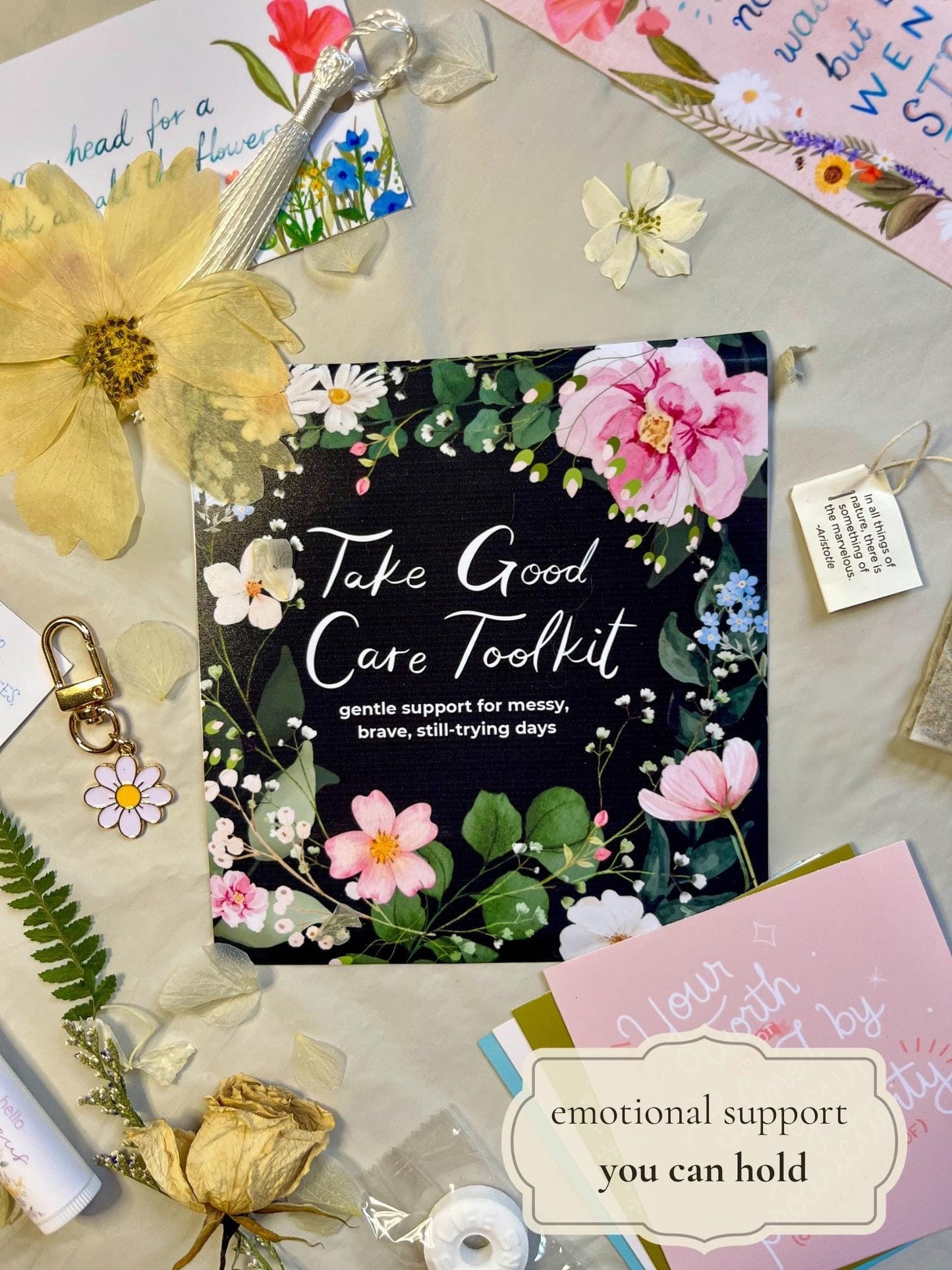
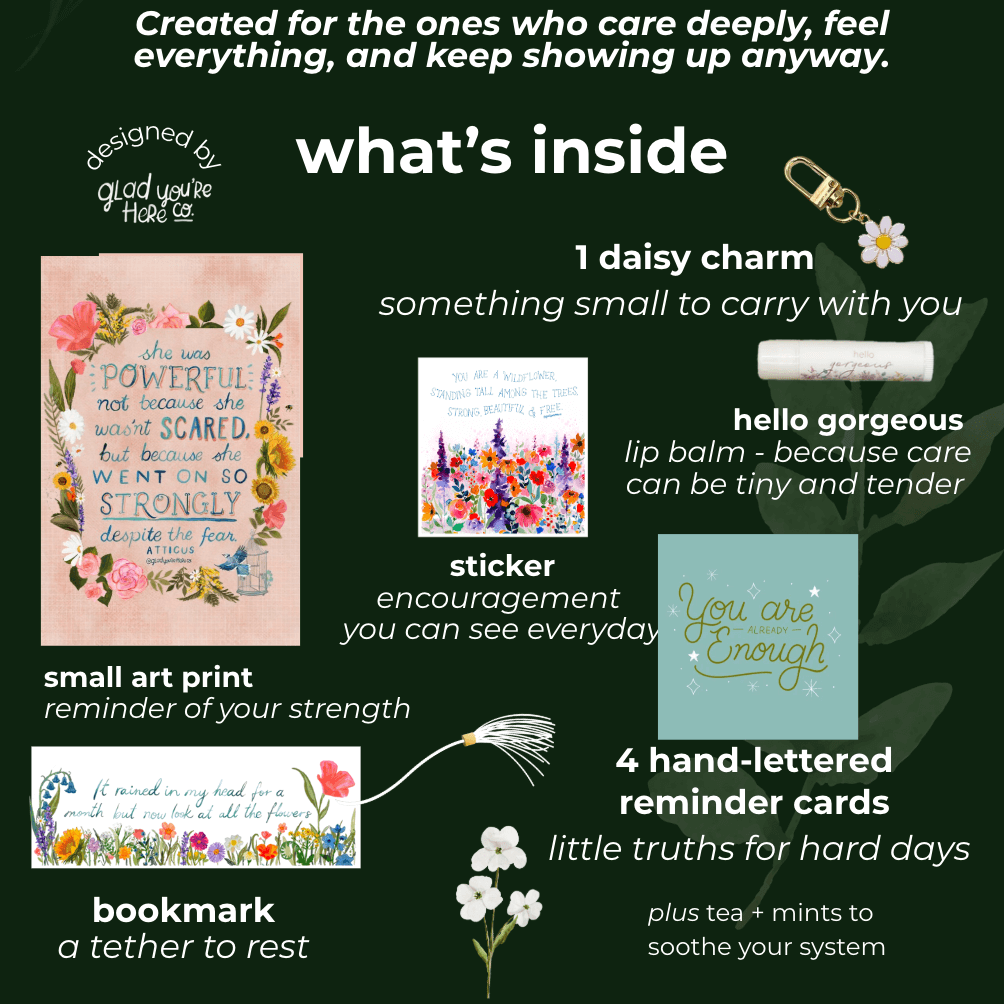
I made something for this feeling. The Take Good Care Toolkit — a gift box for helpers. For therapists and teachers and counselors and anyone who carries a lot. It has the kind of things in it you'd want someone to leave on your desk at the end of a hard year, or the kind of thing you'd quietly put in a bag for a colleague who's running on fumes and doesn't know how to ask.
You're allowed to order it for yourself. You don't have to gift it to someone else first.