How to Send a Postcard: a soft, no-stress guide
There's a little stack of postcards in a drawer somewhere in your house. You know the one, maybe you bought them on a trip you almost didn't take, or someone sent you one, and you kept it because it felt like being chosen, and every so often you think, I should send one of these to someone, and then you don't, because somewhere along the way, you stopped being sure you remembered how.
So let me just say it plainly: you haven't forgotten anything you can't get back in about ninety seconds. Learning how to send a postcard is not a skill you lost. It's a small ritual waiting for you to sit back down with it, and if you're the kind of person who gives so much to everyone else that a five-minute act of connection feels like one more thing on the list, this one's genuinely for you; it gives back more than it takes.
Let's do it together, slowly, the way you'd want someone to explain it if you were tired.
First, what is a postcard, really
It sounds almost too simple to ask, but it's worth naming: what is a postcard, at its heart? It's a single card, usually with a picture or a painting on one side and a blank, open space on the other. No envelope. No folding. No ceremony. One side to look at, one side to write on, and a stamp in the corner.
That's the whole magic of it, actually. An envelope is a little wall; it says this is private, this is between us. A postcard is the opposite. It travels out in the open. The mail carrier can see it. It arrives on a kitchen counter or a fridge door already halfway to being read. It's a small, unguarded thing, which is maybe why it lands so softly. It's not a whole letter you have to muster the energy to write. It's a wave from across the room.
If you've been carrying the idea that "real" correspondence has to be long and worthy and perfect, a postcard is your permission slip. It's supposed to be short. Shortness is the point.
How do postcards work (the actual, simple version)
Here's the part people overthink, so let me take the worry off your plate. How do postcards work once you drop them in the mail? Almost exactly like a letter, with fewer steps.
You write your note on the left. You put the address on the right. You add a stamp in the top corner. You set it in your mailbox, or a blue postal box, and the postal service carries it the rest of the way. That's it. no weight to guess at, no envelope to seal, nothing to tuck or fold.
In the U.S., a postcard has its own stamp rate, a little cheaper than a regular letter, because it's lighter and standard-sized. You can buy postcard stamps at the post office or online, but honestly, a regular forever stamp works too if that's what's in your drawer. The mail will still find its way. Nobody at the post office is going to send it back for being a penny over. Take good care of the small stuff, sure, but don't let the small stuff become a reason to not send it at all.
How to fill out a postcard, step by gentle step
Okay. Card in hand. Picture side down, blank side up. You're looking at a rectangle, usually with a faint line down the middle or a little stamp box printed in the corner to guide you. Here's how to fill out a postcard without second-guessing a single part of it.
The left side is yours. That's where your message goes. Your words, your handwriting, however it looks today.
The right side is theirs. That's where the address goes: their name, then their street, then their city, state, and zip.
The top right corner is for the stamp. One stamp, pressed on. done.
If your card doesn't have a line down the middle, don't worry; just keep your note to the left half and leave the right half clear for the address so the postal scanners can read it easily. That's the only real rule. Everything else is yours to play with.
And if you're the sort who needs to hear it: your handwriting is fine. It doesn't have to be pretty. The person opening their mailbox is not grading your penmanship. They're just glad it's you.
How to address a postcard so it actually arrives
Let's slow down on this part, because it's the one people feel unsure about. How to address a postcard is the same as addressing anything else; it just lives on the right half of the card instead of the front of an envelope.
Write it like this, one line at a time:
- their name
- their street number and street (and apartment or unit, if there is one)
- their city, their state abbreviation, their zip code
So it might look like: Sophie Brenner / 214 Maple Street / Asheville, NC 28801. That's a complete address. That's all the postal service needs.
If you're sending it further than your own country, add the destination country as the last line, and know it'll take a little longer to travel. That's part of the charm, I think: the waiting. A postcard is one of the last things in your life that isn't instant, and there's something restful in that. It arrives when it arrives. The garden doesn't apologize for taking its time, and neither does the mail.
What to write on a postcard when your mind goes blank
This is the real hurdle, isn't it? Not the stamp, not the address, the blank space. You flip the card over, and suddenly every thought leaves your head.
So here's the truth that helps me: a postcard has almost no room, and that's a mercy. You are not writing an essay. You have space for three or four sentences, tops. the smallness does the work for you.
If you're stuck on what to write on a postcard, try one of these and let it be enough:
- Tell them one true thing you noticed today. The light was doing something gold through the kitchen window, and it made me think of you.
- Name the reason you're writing. No reason, just wanted you to have something in your mailbox that wasn't a bill.
- Send a single, specific memory. I still think about that terrible diner coffee we drank at 2 am. Best worst coffee of my life.
- Offer one gentle reminder: you're doing better than you think you are. That's the whole message.
You don't need a beginning, middle, and end. you need one warm, honest thing. Sign your name. That's a finished postcard.
And here's a small permission if you've been holding your breath about it: you're allowed to send one that says almost nothing; thinking of you and your name is a complete and lovely thing to receive. I've kept postcards that said less than that.
The difference between sending one and keeping the habit
Here's the quiet thing I've learned, both as a person and as someone who ships a lot of mail: the hard part was never how to send a postcard. It's remembering to. it's having the cards on hand, having a stamp, thinking of it before the moment passes.
Which is exactly why the ritual tends to fade even for people who love it; life fills up. The drawer stays closed, you mean to, and then it's Tuesday again.
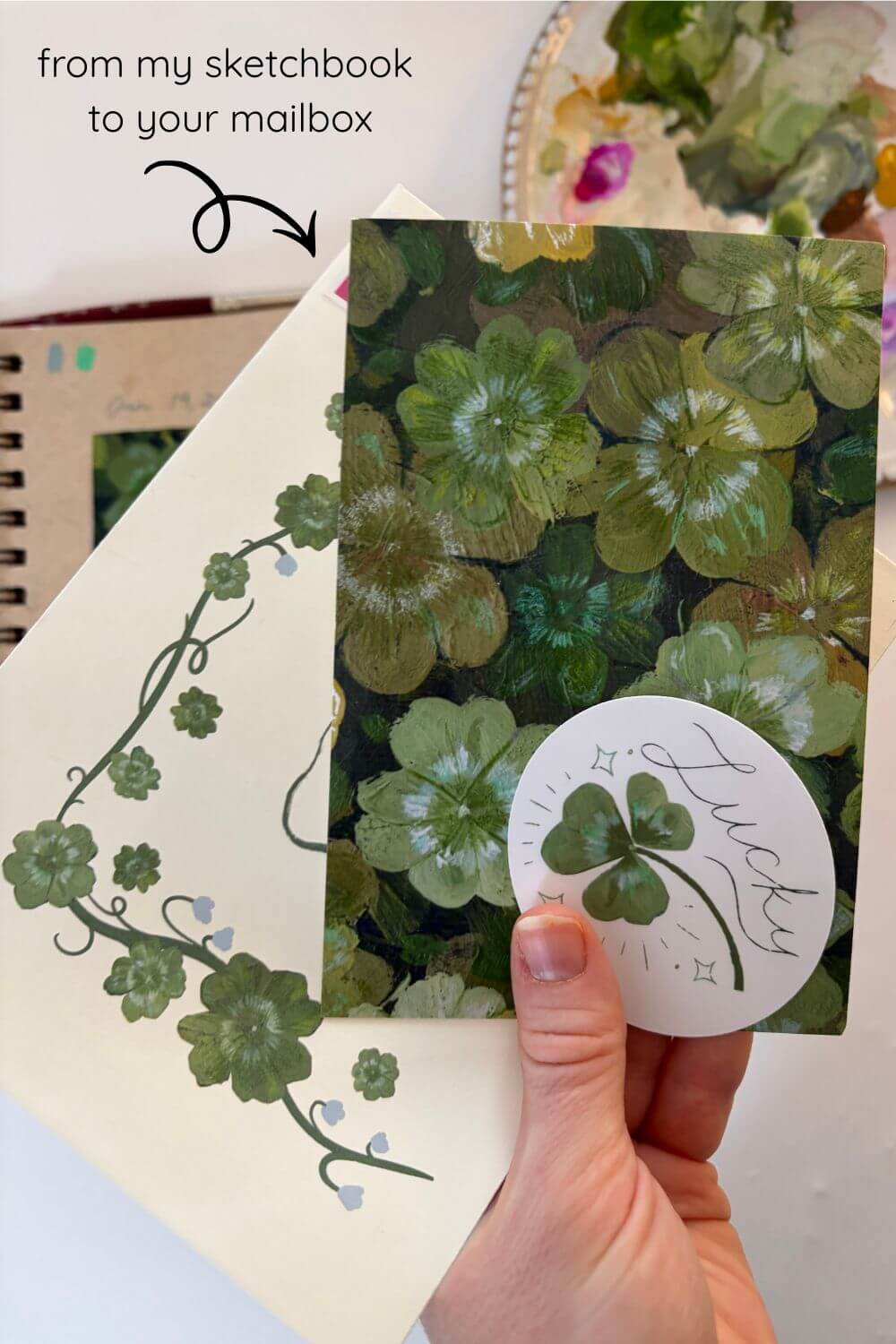
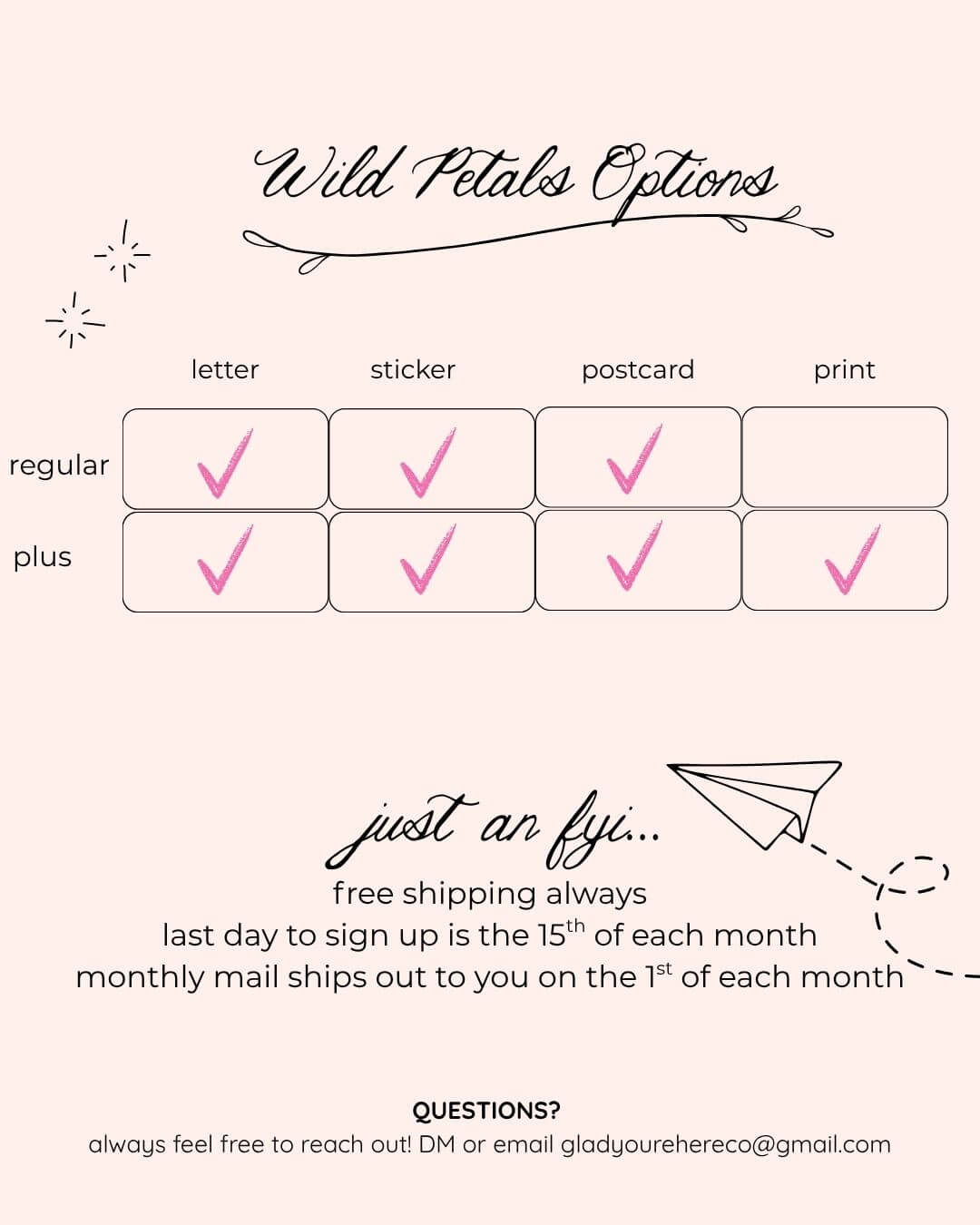
So if you want the habit and not just the occasional good intention, the trick is to make the mail come to you, to keep something small and analog arriving on a rhythm, so the whole practice stays alive in your hands. That's actually why I started the wild petals postal service: a monthly postcard subscription where a little hand-painted card lands in your mailbox from me, on purpose, every month. Some people keep them. Some people write on the back and pass them along to someone who needs one; either way, it keeps the ritual of real mail warm without you having to remember a single thing.
If that sounds like a soft yes, you can find it here. Think of it less as a purchase and more as an analog letter from me to you, showing up whether or not it's been a good month.
A small exhale before you go
You already knew how to do this. You just needed someone to sit next to you while you remembered.
So this week, if you can: pull one card out of that drawer. Write three sentences to someone who'd be surprised to hear from you. address the right side, stamp the corner, and let it go out into the world unguarded. You don't have to be good at it. You just have to send it.
And then, maybe, be the kind of person who has cards on hand for next time, because knowing how to send a postcard is one thing, and letting yourself keep doing it is the softer, better thing.
You've done enough today. This one's just for joy.
Keep blooming, Julie @ glad you're here co.